REVIEW · LONDON
Private James Bond Fictional and Film Spy Tour of London
Book on Viator →Operated by Tours Of The UK · Bookable on Viator
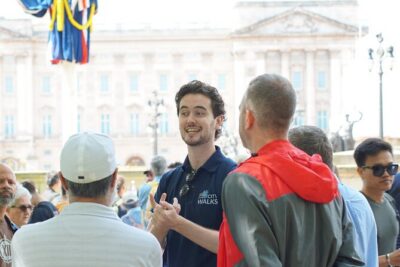
London turns into a spy map fast. This private, story-led walk links James Bond film spots with the real places behind Ian Fleming and British intelligence, so you’re not just looking at buildings. I like how it moves quickly between recognizable locations, and I like that it’s set up for a group of up to 15 at one flat price, which feels like good value for friends or families. The one thing to consider: it’s designed for people with moderate physical fitness, and the guide may use a tablet for visuals that can be hard to see in strong daylight.
If you’re the type who likes details, this tour gives you plenty: chase-scene filming logic, why certain shots were done in London, and what parts are real versus movie magic. You’ll also get a clear path through central London without the stress of figuring out which tube stop is closest to the next set.
Before you go, plan around the timing. This is offered at a wide range of departure times, so pick one that fits your day, and reserve ahead (it’s often booked about a month and a half in advance).
In This Review
- Key things to know before you go
- Private Bond walk: the value of one guide for up to 15
- Somerset House: the Admiralty building behind the spy London vibe
- Rules Restaurant and Charing Cross: where Bond gets street-level specific
- Trafalgar Square to the National Gallery: the Q moment you won’t forget
- Reform Club and Carlton Gardens: when private clubs meet public power
- The Mall view: Buckingham Palace plus a surprising Bond connection
- Admiralty House: where Ian Fleming’s real work shaped the spy myth
- MI6 origin at Horseguards: Sir Mansfield Cumming and the real start point
- Whitehall and Westminster Bridge: government walls and a high-security ending
- Vauxhall Bridge finale: real MI6 headquarters in your line of sight
- Timing, walking pace, and that one TFL payment you may need
- Guide quality: what makes this tour feel fun instead of lecturing
- Who this tour suits best (and who might want a different plan)
- Should you book this James Bond spy tour?
- FAQ
- How long is the Private James Bond Fictional and Film Spy Tour of London?
- How much does the tour cost?
- Is this tour private?
- What language is the tour offered in?
- Where do we meet, and where does the tour end?
- Do I need admission tickets for the stops?
- Is public transportation involved during the tour?
- What payment do I need for the bus segment from Whitehall to Vauxhall Bridge?
- What will I receive for ticketing?
- Can I cancel for a full refund?
Key things to know before you go
- Private for your group (up to 15): one guided experience, not a crowded join-in group.
- Film scenes tied to real intelligence history: you’ll see where Bond stories overlap with British spy work.
- Quick stops built for attention: short time windows at each location keep the pace lively for 3 hours.
- East-to-West route with great views: you’ll hit central landmarks and end near Vauxhall.
- One out-of-pocket cost may apply: you may need to pay for a bus segment using TFL payment.
- Guides can be witty and information-heavy: past guides like Tom, Neil, and Dewi have been praised for making the stories easy to follow.
Private Bond walk: the value of one guide for up to 15
This is priced at $246.91 per group with a cap of up to 15 people, and that’s the first reason I think it’s smart. In London, private guiding usually gets pricey fast, but here the guiding fee is set up so a small group of friends (or a family unit) can split it and still get a personal pace.
The tour lasts about 3 hours, and it feels like a guided film scavenger hunt with an education layer. You’ll start at Somerset House and finish at Vauxhall Station, which keeps the route logical and prevents the typical start-over problem when a day goes sideways.
Because it’s private, you don’t have to wait for a big crowd to shuffle from stop to stop. You can also ask questions that go beyond Bond—like how real intelligence work actually functions, and why film-makers sometimes choose a different reality than the one you expect.
You can also read our reviews of more tours and experiences in London.
Somerset House: the Admiralty building behind the spy London vibe
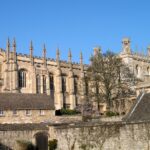
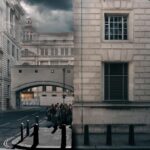
You begin at Somerset House, in the East Wing area near WatchHouse. The building has an official, Georgian-era feel, and that matters because it helps the guide explain why this kind of setting works so well for spy stories—serious stone, big institutional lines, and plenty of cinematic potential.
Here’s what makes this stop more than a photo break: you’ll hear why Bond-style productions favored London rather than building a whole look around Russia. You’ll also get a sense of how many productions have used this kind of London architecture, which helps you recognize that film history is layered on top of the city’s real history.
Practical note: Somerset House is a busy area at street level. Give yourself a minute to orient at the meeting spot so you’re not late when the group forms.
Rules Restaurant and Charing Cross: where Bond gets street-level specific
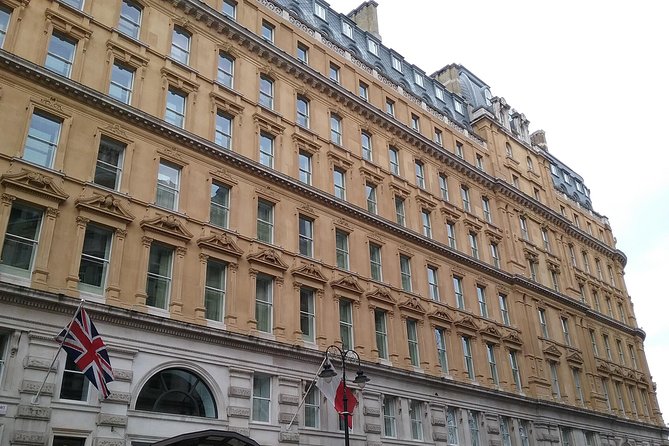
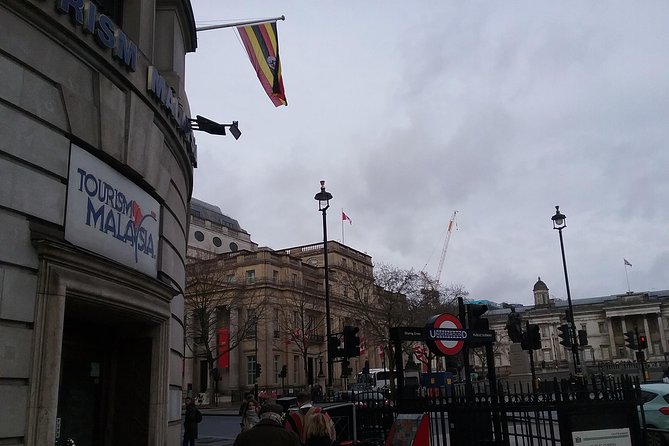
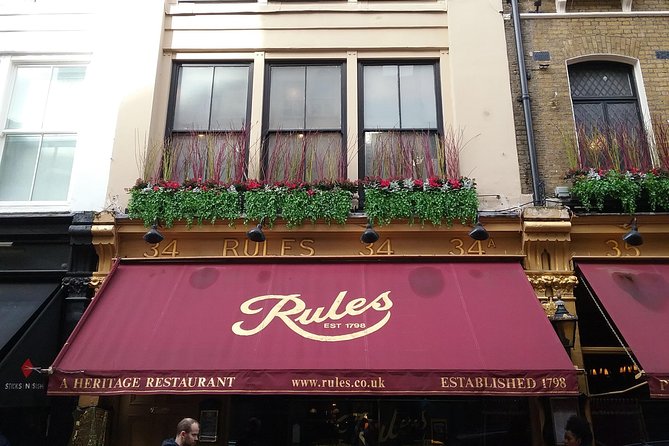
Next you’ll hit Rules Restaurant, often described as London’s oldest eatery. The interesting part for a Bond fan isn’t only the age—it’s the way your guide links the dining-world gravitas of the place to the movie’s own intelligence-flavored character moments.
From there, you go to Charing Cross Underground Station. This is one of those stops where the location detail is the whole point. You’ll learn how Transport for London helped make a chase sequence work, and you’ll hear about the high-wire stunt planning that the story uses as part of the Skyfall-style intensity.
Even if you don’t care about the technical side of stunts, I like this stop because it teaches you something about how filming uses real infrastructure. Tube stations and corridors are hard constraints. That makes the behind-the-scenes angle feel grounded, not made-up.
Trafalgar Square to the National Gallery: the Q moment you won’t forget
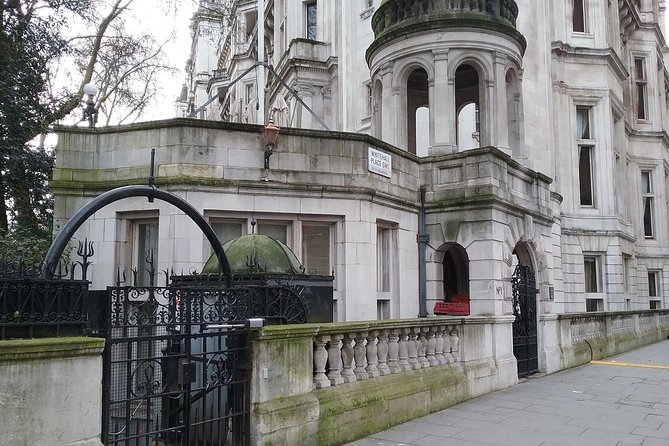
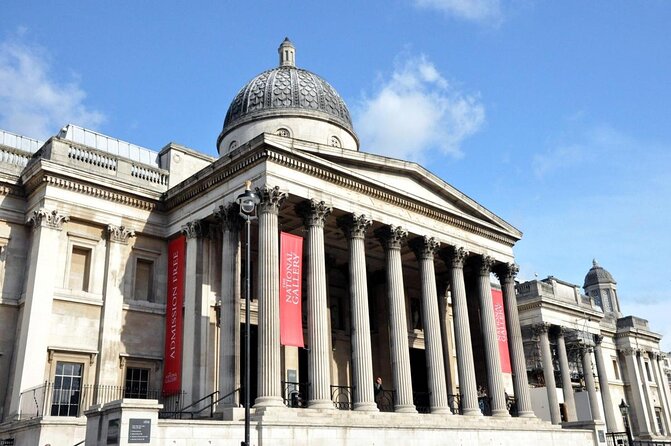
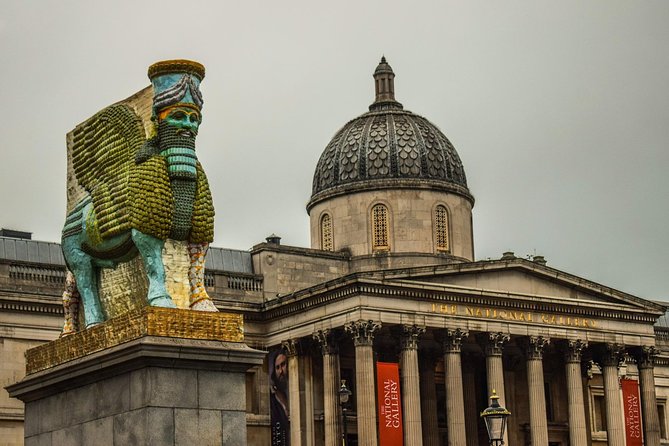
You’ll briefly pass through Trafalgar Square, then head into the National Gallery. The fast stop at Trafalgar Square is a useful reset: it breaks up the route and gives you a familiar landmark reference point for the rest of the day.
At the National Gallery, the tour leans into a very specific Bond beat—meeting the newer Q and the tension around what triggers things and what makes systems act. This is the kind of scene where you might wonder how a sequence can happen in a place used by millions each year, and your guide answers that question with practical explanations about filming inside a major public gallery.
If you like art but usually skip Bond-related tours, this is the stop where you might change your mind. The National Gallery context makes the scene feel less like movie fantasy and more like a real collision of two worlds: culture and covert operations.
Reform Club and Carlton Gardens: when private clubs meet public power
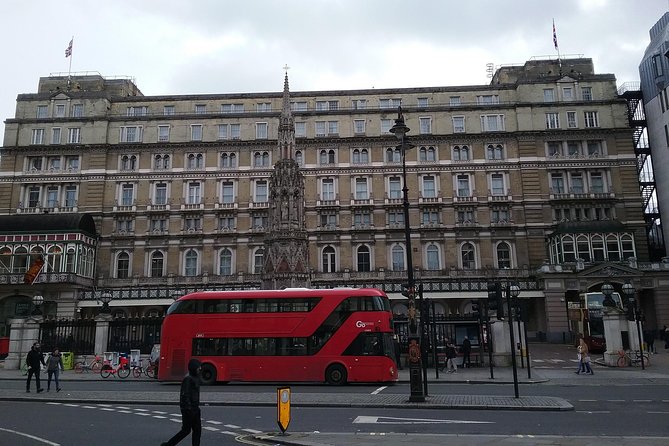
The Reform Club on Pall Mall comes next. This is a classic gentlemen’s club setting, and the guide uses it to explain how film-makers deal with restrictions in real member-only environments. You’ll also hear how the club shows up across multiple major film and TV productions, not only Bond.
Then you’ll move to Carlton Gardens, outside the London home associated with the British Foreign Secretary. This stop shifts your attention from movie set pieces to jurisdiction and authority—the idea that real intelligence work sits inside government structures, rules, and chain-of-command realities.
It’s a smart pivot. Bond often treats espionage like pure improvisation, but here the tour emphasizes the scaffolding underneath it. You end up with a clearer picture of why MI6 isn’t just a secret building—it’s part of a larger system tied to the UK government.
The Mall view: Buckingham Palace plus a surprising Bond connection
The Mall gives you impressive views toward Buckingham Palace. Even if you’re not deep into monarchy facts, this stop works because your guide ties it to a Bond-style London moment that links the series to a real public event.
You’ll hear how Her Majesty Queen Elizabeth II appeared alongside James Bond as part of the London 2012 Olympic Opening Ceremony. You’ll also learn how Danny Boyle’s involvement helped make that happen, and how the name-checking shows up across the franchise.
This is one of the easiest stops to enjoy because it’s mostly about seeing. You get the wide-angle London postcard view, and then you get a quick story that connects it back to the Bond universe.
Admiralty House: where Ian Fleming’s real work shaped the spy myth
Now you get into the heart of why this tour is more than a fan walk. Admiralty House is where Ian Fleming spent much of the Second World War working first for Admiral Sir John Godfrey and the Director of Naval Intelligence, then taking on various intelligence roles.
What I like here is how the guide connects Fleming’s actual intelligence experience to the tools and instincts he used to create the fictional Bond world. Instead of just saying Fleming wrote spy stories, you’ll hear the sequence of real roles that gave him material for fiction that still feels specific and operational.
There’s also a heavy-hitting claim your guide highlights: Fleming traveled to America as part of intelligence work that helped establish what later became the CIA. Even if you only know one or two Fleming facts, this stop gives you enough to understand why Bond feels like it has procedure, not just gadgets.
MI6 origin at Horseguards: Sir Mansfield Cumming and the real start point
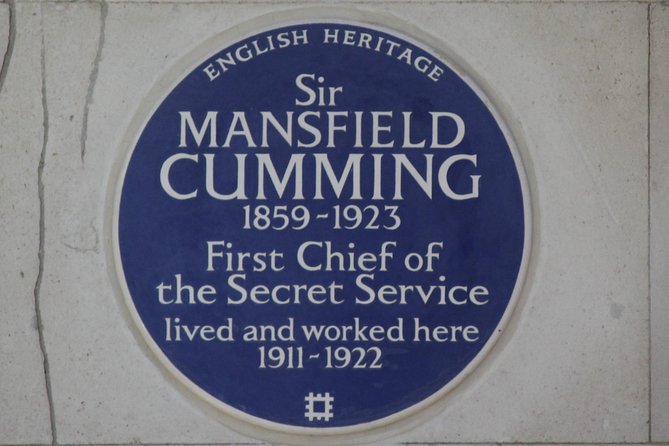
Next you’ll visit the Royal Horseguards Hotel and the One Whitehall Place area. This is where your guide explains that MI6 started, linked to Sir Mansfield Cumming, the first chief of the British Secret Intelligence Service (SIS).
This stop changes the tone in a good way. The tour moves from film moments into the foundation stories: what it takes to run an intelligence service, why different eras can be strong or flawed, and how the real world of spying informs the stories you see on screen.
If you want context for the Bond mythology—why certain institutions appear so often, and why they’re portrayed with both competence and danger—this is where you get it.
Whitehall and Westminster Bridge: government walls and a high-security ending
Whitehall is the next layer: it’s the seat of government, and your guide uses that setting to talk about what’s supposedly behind a gun battle at an Intelligence and Security Committee meeting. The phrasing you’ll hear is less about repeating a plot and more about discussing what the location implies about access, secrecy, and the way power is staged.
Then comes Westminster Bridge. Here, your guide connects the action-packed ending of SPECTRE to the idea of filming in a high-security area and shares behind-the-scenes logic that can surprise you.
This section is where I’d suggest you pay attention to the way your guide talks. The route gives you the city’s big political geometry. When you combine that with filming constraints, it’s easier to understand why movies choose certain angles and locations even when the scene could have been shot elsewhere.
Vauxhall Bridge finale: real MI6 headquarters in your line of sight
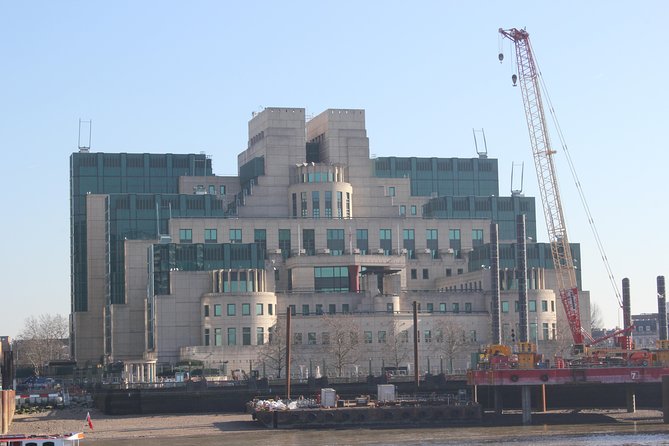
You finish at Vauxhall after stopping at Vauxhall Bridge. This is where you get the clearest “there it is” moment, since you can see the real MI6 headquarters building from here.
Your guide will connect that location to multiple film sequences, including The World Is Not Enough, Skyfall, and SPECTRE. You’ll also hear how some things about the headquarters feel less straightforward in movies than in reality, which makes the finale feel less like a victory lap and more like a reality check.
The ending near Vauxhall Station is convenient. It also gives you an easy next move: you can hop onto public transport without having to backtrack to central hotspots.
Timing, walking pace, and that one TFL payment you may need
The tour runs for about 3 hours, and the route includes multiple stops with short time windows. That means you should expect a steady walking pace, and you’ll want to dress for London weather.
One specific cost detail matters: you may need to pay for the bus journey from Whitehall to Vauxhall Bridge using TFL Oyster, a Travelcard, or contactless payment. If you don’t use transit cards much, plan ahead so you’re not scrambling at the moment you need to board.
Also, bring sunglasses or a hat if it’s bright. One guide aid can be a tablet for visuals, and daylight can make it harder to read. If you pick a departure time that fits your day (and avoids peak glare), you’ll enjoy the experience more.
Guide quality: what makes this tour feel fun instead of lecturing
The guides on this tour have a reputation for combining entertainment with real-world context. Names that have stood out include Tom, Neil, and Dewi, and the common thread is how they keep stories moving without turning it into a dry lecture.
You’ll notice it in the way they explain filming logic—how London locations can be used, what gets restricted, and why certain scenes feel intense. They also connect the Bond narrative to broader intelligence concepts like how organizations operate under government authority.
My advice: ask questions that match your interests. If you’re into films, ask about how filming constraints affect the final shot. If you’re into history, ask how real intelligence work differs from movie-style improvisation. A private group makes that easy.
Who this tour suits best (and who might want a different plan)
This tour is a strong fit if you:
- Love Bond films and want location context without needing to memorize every scene
- Want a guided walk that mixes cinema and real intelligence history
- Are traveling with a group that can split the per-group price (up to 15)
It might be less ideal if you:
- Want a long, slow museum-style experience at fewer stops
- Have very limited mobility needs, since the day is built around short walking segments and quick stops
- Expect the tour to include food—Rules is a stop, but the experience is guided sightseeing, not a meal package
Should you book this James Bond spy tour?
I’d book it if your idea of a good London day is getting your bearings while also learning what makes the city feel like a spy story. The value stands out because the per-group price supports larger friend groups without blowing up the budget, and the mix of film locations with Ian Fleming and MI6 context makes it feel smarter than a simple fan walk.
Book early if your dates are fixed—this one’s often reserved about 44 days in advance. And choose your departure time thoughtfully: the route is best when you can enjoy the outdoor views and still read the guide’s visuals without squinting.
If your travel style is curious, and you like real places behind popular stories, this tour delivers.
FAQ
How long is the Private James Bond Fictional and Film Spy Tour of London?
It runs for about 3 hours.
How much does the tour cost?
The price is $246.91 per group, for up to 15 people.
Is this tour private?
Yes. It is private, meaning only your group participates.
What language is the tour offered in?
The tour is offered in English.
Where do we meet, and where does the tour end?
You meet at WatchHouse Somerset House, Somerset House East Wing, London WC2R 1LA. The tour ends at Vauxhall Station.
Do I need admission tickets for the stops?
The stops are listed as admission ticket free, so you should not need separate paid entry for each location as part of this schedule.
Is public transportation involved during the tour?
You’ll be near public transportation. Also, there may be a bus journey from Whitehall to Vauxhall Bridge that requires payment.
What payment do I need for the bus segment from Whitehall to Vauxhall Bridge?
You’ll need TFL Oyster, a Travelcard, or contactless payment for that bus journey.
What will I receive for ticketing?
You’ll receive a mobile ticket.
Can I cancel for a full refund?
Yes. You can cancel up to 24 hours in advance for a full refund.