REVIEW · INVERNESS
Full-Day Outlander Experience in the Scottish Highlands from Inverness
Book on Viator →Bookable on Viator
Outlander fans, this is your type of day. You’ll move through Inverness and the nearby Highlands, linking familiar book and TV moments to places tied to Jacobite history and older Scottish life, from Clava Cairns to the war after Culloden. Culloden and Clava Cairns alone make the day feel bigger than a normal sightseeing loop.
I especially like that this is a private tour. You get a dedicated driver/guide, real time to ask questions, and no fighting for space or timing—so you can slow down where your curiosity wants to stop, like the visitor centre at Culloden.
One thing to consider: it’s a long, packed day with several stops tied to heavy history. Plan for cold and changing weather, and expect that not every site is free—some places require tickets on the spot.
In This Review
- Key highlights to look for
- What You’re Paying For: $867.23 for up to 3, and why it works
- Starting in Inverness: Lord Lovat’s Town House and Simon the Fox
- St Stephen’s Church Tower: Culloden’s prisoners in cold stone
- Culloden Battlefield: the visitor centre is the real anchor
- Kings House Stables: the overnight before the next morning
- Clava Cairns: standing stones, Creag Na Dun vibes, and lay lines talk
- Wardlaw Mausoleum: Fraser burial lore, and the forensic controversy
- Castle Leod (the real-life Castle Leoch stand-in) and the photo moment
- Beauly Priory: Mary Queen of Scots, Cromwell, and Claire’s turning points
- Fort George and the Black Watch: power after the ’45
- Loch Ness and Urquhart Castle: the classic Highland exhale
- What makes the guides matter on this tour
- Who this Inverness Outlander day fits best (and who should think twice)
- Should You Book This Outlander Highland Tour from Inverness?
- FAQ
- How long is the full-day Outlander experience?
- What’s the starting time in Inverness?
- Is this tour private?
- Is hotel pickup and drop-off included?
- What language is the tour offered in?
- Are admission tickets included?
- Where does the tour take you for Outlander connections?
- What’s the cancellation policy?
Key highlights to look for
- Private group feel: hotel pickup, private vehicle, and undivided guide attention
- Culloden Battlefield depth: award-winning visitor centre time that actually helps the story click
- Clava Cairns Outlander inspiration: standing stones and Cairns tied to Creag Na Dun fan lore
- Fraser-area access with respect: Fraser-linked sites like Wardlaw Mausoleum, where decorum matters
- Fort George perspective shift: the British military rebuild after the ’45 hangs in the air
- Loch Ness and Urquhart Castle time: a classic Highland payoff later in the day
What You’re Paying For: $867.23 for up to 3, and why it works
The price is listed as $867.23 per group (up to 3), which is actually the first thing I’d do the math on. For two or three people, private transport for an 8-hour day with hotel pickup can land in a sensible range compared with cobbling together buses plus paid taxis plus separate tickets.
You’re paying for three things that matter in the Highlands: comfort (a private vehicle), time (a full day rather than a short hit), and guidance (live commentary on board). If your top priority is Outlander connections and real Scottish history in one go, this setup is strong value.
The other practical win: you’re not stuck timing your day around public transport. Your driver will pick you up from your location and drop you where you need to end the day, which helps a lot if you’re staying in Inverness.
You can also read our reviews of more tours and experiences in Inverness.


Starting in Inverness: Lord Lovat’s Town House and Simon the Fox
Your day begins in Inverness, at the Thought to be the Town House of Lord Lovat (Simon the Fox). The house is said to date to 1593 and is described as the oldest house in Inverness.
Even if you’re not deep in Jacobite family trees, this stop gives you quick grounding: Outlander fans recognize the name, and history lovers get a real sense of how old Inverness is—this isn’t all “Highlands romance.” It’s also a good warm-up stop because it’s short and easy before the day turns more serious.
If you’re the type who likes context before you hit the big battle sites, you’ll appreciate this start.
St Stephen’s Church Tower: Culloden’s prisoners in cold stone
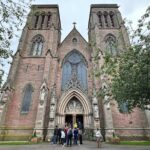
Next up is Old High St Stephen’s Church. The story here is grim: after Culloden, Jacobite prisoners were held in the church tower and executed one by one, blindfolded.
There’s a very specific detail that makes the site hit harder than “a marker in a field”: you can still see musket ball marks in the wall. It’s a brutally practical reminder that this was a civil war, not a far-off legend.
The tradeoff is also obvious. This stop takes emotional energy, and it’s not a long one. If you want lighter vibes early on, you’ll need to pace yourself mentally for what comes next.
Culloden Battlefield: the visitor centre is the real anchor
At Culloden Battlefield, you get the heart of the Jacobite story. The day frames Jamie Fraser’s arc through the lens of the real defeat that ended the clan way of life forever—Culloden is described as the last pitched battle fought on British soil.
I like that you get real visitor centre time here. An award-winning centre isn’t just nice for rainy days—it helps you understand what you’re seeing outside. Without that context, Culloden can feel like a quiet field and a few monuments. With it, the place becomes a turning point.
You’ll also hear about the aftermath, including an Act of Proscription that banned wearing tartan, carrying arms, speaking Gaelic, and playing bagpipes for 40 years. That’s not trivia; it explains why Highland culture could survive in memory while being targeted in daily life.
Admission isn’t included for this stop, so factor that into your day plan, but the added understanding is usually worth it.
Kings House Stables: the overnight before the next morning
Between the battlefield sites, there’s a stop tied to Jacobite officers being held overnight and then executed the next morning. It’s connected with Kings House Stables, where Jamie Fraser is mentioned among those imprisoned.
This is one of those stops that doesn’t need big scenery. The point is the timing: the shift from capture to fate, and how quickly outcomes were decided.
If you’re the kind of Outlander fan who likes seeing how fiction points to something real, this bridge helps.
Clava Cairns: standing stones, Creag Na Dun vibes, and lay lines talk
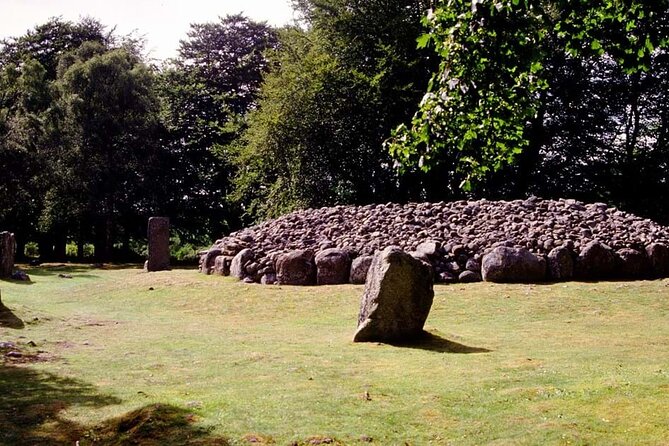
Clava Cairns is one of the most rewarding stops of the day, because it’s not only about the 1700s. These are described as a 4,000-year-old burial ground with cairns surrounded by standing stones.
Here’s the Outlander connection: the stones and the layout are thought to be inspiration for Creag Na Dun. Fans also point to two stones specifically—the tallest stone at Cairn number one and the butterfly stone at Cairn number three—often used as a visual signature in the Outlander blog world.
There’s also talk of lay lines and energy conduits traveling from stones to cairns. You don’t have to buy into that to enjoy the place. What matters is the feeling: it’s a spiritual, still kind of stop where people slow down and look longer.
Admission is required, so plan for that. But the short time there doesn’t feel rushed—more like a focused pause in the middle of a long day.
Wardlaw Mausoleum: Fraser burial lore, and the forensic controversy
At Wardlaw Mausoleum, you’re in Fraser family territory. The mausoleum dates to 1634 and includes family burial, with a coffin reputedly linked to Simon, Lord Lovat—the Old Fox.
This stop stands apart because it includes a modern question mark. A forensic investigation by Dame Sue Black is mentioned, with reported doubt about the validity of the remains. The notes describe the remains as appearing to be those of a headless woman around 30 years old, and the custodian is seeking permission for exhumation.
That blend—old family legend, plus modern forensic reality—gives the tour a grown-up edge. It’s not just “cool story.” It’s, what do we actually know?
The other key point: this is described as a privileged visit that requires respect and decorum. If your group likes to take photos fast and talk loudly, set expectations early.
Castle Leod (the real-life Castle Leoch stand-in) and the photo moment
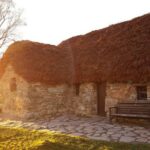
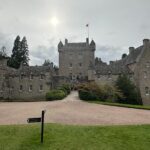
Castle Leod is a 12th-century castle and today is home to the Earl of Cromartie, chief of clan MacKenzie. For Outlander fans, the tour positions it as a real-life homage to Castle Leoch—since the actual filming ended up at Doune Castle near Stirling, this stop is the “closest feel” in the Inverness area.
One practical perk: special arrangement allows the vehicle to drive into the grounds for a photo opportunity with the castle in the background. That saves time and makes the castle feel more present, instead of being only a distance view.
You also get a woodland walk in the grounds and mentions of special trees, including one planted by Diana Gabaldon. If you’re a show-and-books person, this small detail is exactly the kind of breadcrumb that makes the day feel tailored to your interests.
This stop isn’t included for admission, so again, factor in ticket cost. But even with tickets, this feels like a solid “fan payoff” stop.
Beauly Priory: Mary Queen of Scots, Cromwell, and Claire’s turning points
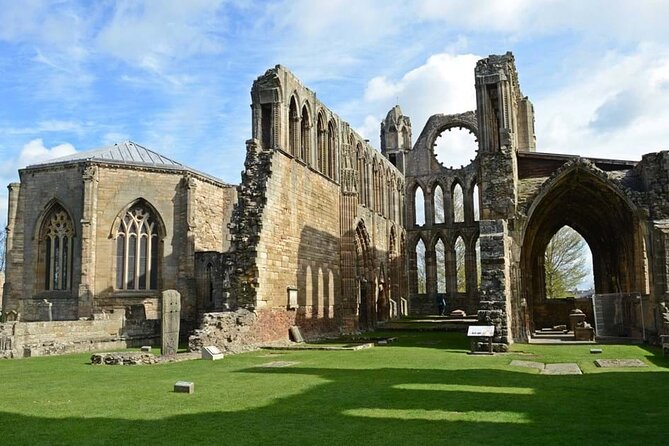
Beauly Priory is a calmer, greener-feeling stop after the battle-heavy sections. Founded in 1230 by monks of the Valliscaulian order from Dijon and a local landowner named John Byset, it’s also connected with Mary Queen of Scots, who spent her youth in France and was betrothed to the Dauphin.
There’s a naming story tied to Mary: she’s credited with remarking “Beau Lieu,” meaning beautiful place, which helps explain the name Beauly.
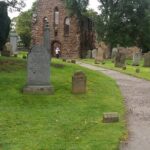
The Outlander thread shows up in two ways here: Claire receives advice from a female Gaelic seer while Jamie is wounded in a rear chapel, and the site is linked with the moment they leave Scotland for France on a schooner anchored in the Firth.
Then the real-history side adds weight: Oliver Cromwell sacked the priory, and stone was transported by barge to Inverness to build his Citadel. So this is a place where religion, power, and upheaval all sit side by side.
Admission is listed as free for this stop, which makes it a good “value stop” in the middle of ticketed sites.
Fort George and the Black Watch: power after the ’45
Fort George is a big, solid counterpoint to everything that came before. It’s described as a tangible message from the British government after the ’45 Jacobite rebellion, built from 1746 at a reported cost of £240,000.
Today it’s home to the Black Watch Regiment. The tour also explains that it replaced three older fortresses destroyed by Jacobite forces and that the fort carries names tied to King George’s sons: William, Augustus, and George.
Outlander fans will recognize it as the closest match for the kind of prison-and-torture atmosphere linked to Jamie and Captain Jack. Even if you’re not watching the show right now, Fort George tells you something real: after defeat, the state built stone walls to prevent the next rebellion.
Admission isn’t included here, so plan for that cost.
Loch Ness and Urquhart Castle: the classic Highland exhale
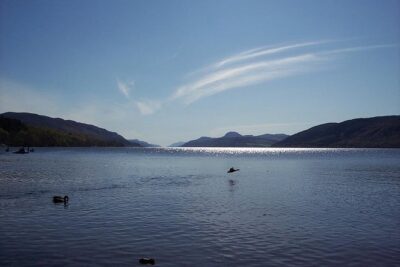
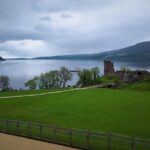
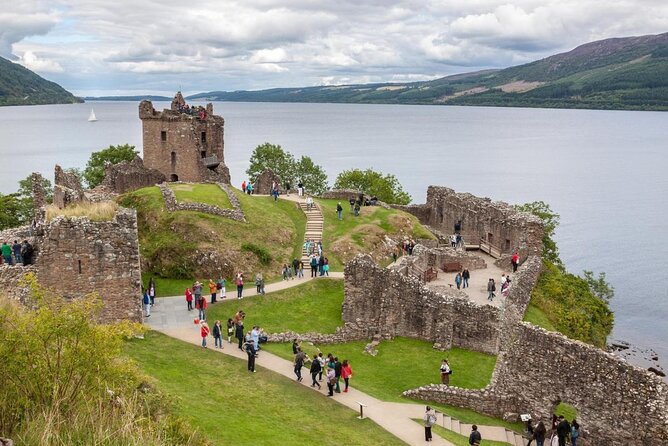
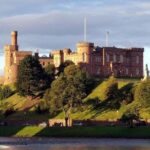
Somewhere in the back half of the day, you get to Loch Ness and Urquhart Castle. This is the part of the day that gives you a breather view-wise, and it’s also a big reason many people book this tour even if they don’t know every Outlander detail.
Urquhart Castle adds that “ancient fortress” feel—more open air, more sweeping views, and more time to look out instead of reading plaques. It’s also a helpful reset after Culloden and the prison-related stops.
Urquhart Castle admission isn’t listed as included, so you’ll likely pay separately. But even as a fan of the show, I think this is the part where the day starts feeling like a reward, not only a history lesson.
What makes the guides matter on this tour
The guides on this outing come through in a way that affects the day a lot. I’d call out three things you should look for in your own planning:
First, many guides are praised for bringing Scottish history to life with the details that make connections make sense—battle context, clan logic, and what’s fiction versus what’s grounded.
Second, the best days happen when the guide adapts. Some guides are described as making on-the-fly adjustments when the group wants more time at a particular place, and one guide even handled special requests like stopping at a pharmacy and keeping the group on schedule so people could reach their cruise time.
Third, personality comes through. There’s mention of a guide singing folk music, and another in a kilt, which might sound small—until you realize it changes how you experience the drive between sites.
You won’t just be a passenger watching the Highlands slide by. You’ll be part of a story, with a human telling it.
Who this Inverness Outlander day fits best (and who should think twice)
This tour is ideal if:
- You’re a first-timer to the Highlands and want a lot of meaning in one day
- You love Outlander and want the show’s locations treated as a path into real Scottish history
- Your group includes two or three people who don’t all share the same intensity for details—you’ll get your own pace with a private setup
You might think twice if:
- Your group hates long drives and prefers fewer stops
- You want a relaxed, mostly scenery-based day with minimal heavy history
- You’re not interested in Jacobite-era context and clan-era culture (because Culloden and Fort George carry a lot of weight)
If your idea of a great day is time outdoors plus calm walking, balance your expectations. This tour gives you plenty of air, but it’s also a “story day.”
Should You Book This Outlander Highland Tour from Inverness?
I’d book it if your goal is a single-day hit that connects Outlander to where history actually happened, with a guide who can explain both the romance and the reality. The private format is the difference-maker here—hotel pickup, dedicated attention, and the ability to adjust the flow when your group gets excited.
If you’re traveling in a group of two or three, the pricing model can feel fair because you’re splitting the cost of private transport. If you’re solo, it may be more expensive per person than a shared day trip—but the “no time wasted” value can still be worth it if you hate rushing.
My final practical advice: pack layers, expect cold or rain, and bring a curious mindset. This day rewards people who want the Highlands to mean something, not just be photographed.
FAQ
How long is the full-day Outlander experience?
It runs about 8 hours.
What’s the starting time in Inverness?
The start time is 9:00 am.
Is this tour private?
Yes. It’s a private tour, so only your group participates.
Is hotel pickup and drop-off included?
Yes. Hotel or port pickup and drop-off are included, and the driver picks up from your location and drops off at your required final destination.
What language is the tour offered in?
The tour is offered in English.
Are admission tickets included?
Some stops are free, but others require separate admission. Admission isn’t included for several major sites listed on the stops.
Where does the tour take you for Outlander connections?
The day includes sites linked to Outlander themes such as Clava Cairns, Castle Leod (as a Castle Leoch homage), and Beauly Priory, plus major historical anchors like Culloden and Fort George.
What’s the cancellation policy?
You can cancel for a full refund up to 24 hours before the experience’s start time. Changes made less than 24 hours before start time aren’t accepted.